Flat Roof Ponding & Membrane Repair Fort Wayne IN
Industrial TPO Hot-Air Molecular Seam Welding, EPDM Rubber Patching & Tapered Polyiso Ponding Elimination
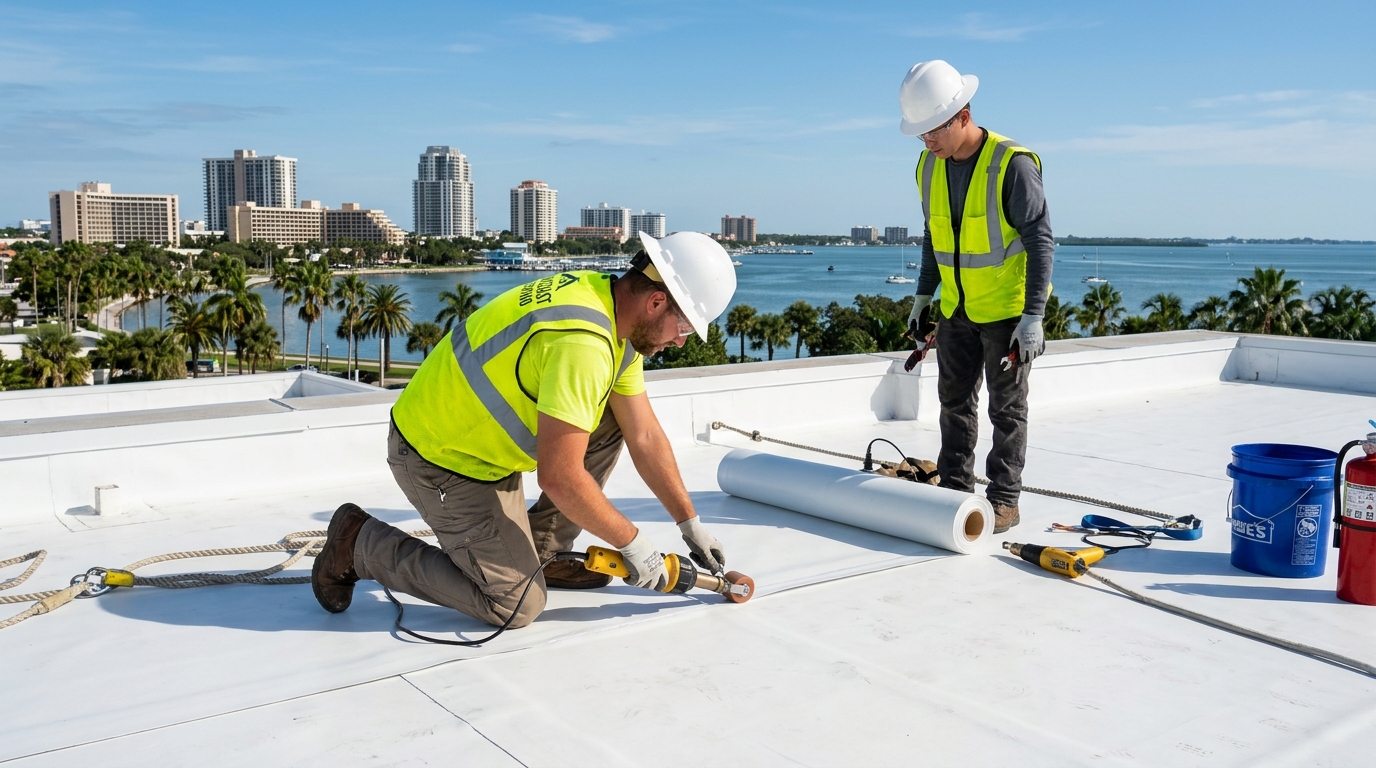
Low-slope commercial buildings, multi-family apartment complexes, and residential modern additions across Fort Wayne frequently suffer from chronic ponding water, ultraviolet seam degradation, and freeze-thaw membrane tearing. With significant industrial and commercial properties throughout Allen County, having access to specialized single-ply membrane and modified bitumen repair crews is vital. Roof Expert USA operates 24/7 emergency dispatch for flat roof leak mitigation, ponding water correction, and certified hot-air seam welding.
Engineering Specialty: Commercial Flat Roof Patch
Flat and low-slope roofing systems—including TPO (thermoplastic polyolefin), EPDM (ethylene propylene diene monomer synthetic rubber), PVC, and multi-ply modified bitumen—require distinct engineering chemistry for effective repairs. Attempting to patch a synthetic single-ply roof using standard asphalt roof cement or asphalt tar is an expensive mistake; petroleum compounds chemically dissolve TPO and EPDM polymers, causing blistering and complete membrane failure.
Dispatched flat roofing specialists utilize certified material-compatible repair methodologies. For TPO systems, technicians clean degraded surfaces with specialized primers and fuse non-cured TPO reinforcement patches using robotic and hand-held hot-air welding equipment at 900 to 1,100 degrees Fahrenheit, creating a permanent molecular weld stronger than the original membrane. For EPDM rubber, technicians install cured vulcanized rubber patches primed with synthetic butyl adhesives, followed by heavy-bodied lap sealant to lock out water ponding indefinitely.
Flat Roof Diagnostic & Drainage Engineering Protocols
Hot-Air Seam Molecular Fusion
Technicians utilize digital temperature-controlled hot-air welders to soften and press overlapping TPO sheets together, re-establishing continuous molecular bonds that resist standing water head pressure.
Tapered Polyiso Saddle Crickets
To permanently eliminate standing water in roof low spots, crews install custom-sloped tapered polyisocyanurate insulation boards that direct water flow toward primary scuppers and internal roof drains.
Scupper & Drain Clamping Rings
Specialists inspect and re-clamp drain bowls, replacing corroded cast-iron clamping rings and installing heavy-duty copper through-wall scuppers with welded exterior splash heads.
Sub-Membrane FLIR Thermal Survey
Thermal imaging cameras detect hidden moisture trapped inside insulation boards beneath flat membranes at dusk, allowing targeted surgical repairs without requiring full roof tear-offs.
What Constitutes Hazardous Ponding Water on a Flat Roof?
The National Roofing Contractors Association (NRCA) and Midwest building codes define ponding water as water that remains standing on a low-slope roof 48 hours after a rainstorm under normal evaporation conditions:
- Extreme Weight Loads: Standing water weighs approximately 5.2 pounds per square foot per inch of depth. A 3-inch deep pond across a 20x20 foot area places over 6,000 pounds of concentrated stress on building roof trusses.
- Accelerated Membrane Oxidation: Ponds act as magnifying lenses for solar ultraviolet radiation, accelerating polymer degradation and drying out protective oils in asphalt membranes.
- Biological Growth & Vegetation: Standing water fosters algae, moss, and opportunistic weed growth whose root systems penetrate membrane laps and puncture flashings.
- Winter Freeze Expansion: Trapped water freezes into solid ice lenses that expand and mechanically rip open flashings and parapet wall termination bars.
Frequently Asked Questions
What should I do if water is ponding on my commercial flat roof in Fort Wayne? +
If water remains standing for more than 48 hours after rainfall, inspect roof drains and scuppers for debris blockages. If drains are clear, call emergency dispatch at (888) 208-4155 to evaluate structural sagging and install tapered insulation crickets.
Can an emergency patch be applied to a wet EPDM or TPO flat roof? +
Yes. Certified technicians use specialized moisture-curing sealants, peel-and-stick membrane repair tapes, and temporary weighted magnetic barriers to stop leaks during active rainfall until dry conditions allow permanent hot-air welding.
Why shouldn't standard asphalt tar be used to fix a TPO or EPDM roof? +
Petroleum-based asphalt cements and coal tar products chemically react with synthetic rubber and thermoplastic membranes, causing severe plasticizer loss, membrane swelling, blistering, and accelerated chemical breakdown.
How long does a professionally welded TPO membrane patch last? +
When executed by a certified technician using high-temperature hot-air molecular welding, a TPO patch becomes a monolithic part of the membrane and will last the remaining operational life of the roofing system (up to 20+ years).